
X just made a quiet but important move for anyone building AI agents around real-time information.
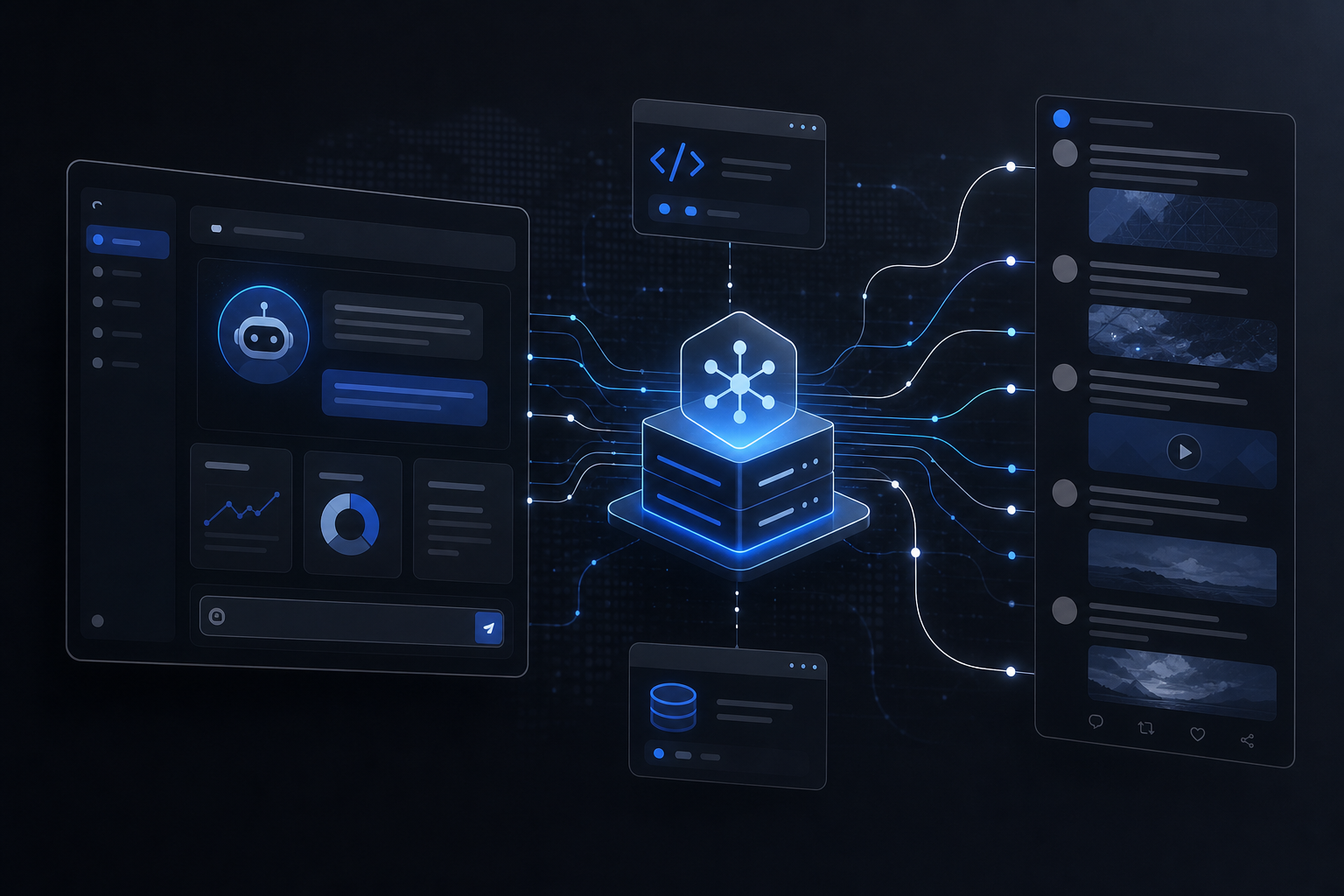
The company now offers hosted MCP servers for the X API and the X developer docs. In plain English, that means AI tools can connect to X through the Model Context Protocol and work with X data in a more structured way. Instead of every developer wiring up custom API calls from scratch, an MCP-compatible assistant can discover tools, call endpoints, search documentation, and work inside a cleaner agent workflow.
This is not just another developer convenience. It is a sign that social platforms are starting to package themselves as agent infrastructure.
What X Is Offering
X’s documentation describes two hosted MCP servers. The first is the X MCP server at https://api.x.com/mcp, which connects AI tools to X API capabilities. The second is the Docs MCP server at https://docs.x.com/mcp, which lets AI assistants search and read X API documentation directly.
The X API MCP server can support workflows around posts, search, users, bookmarks, trends, news, and Articles. Depending on the access route and permissions, an AI tool can search posts, look up users, read timelines and mentions, fetch trends, manage bookmarks, and work with X Articles.
That last part matters. A social platform is no longer only a place where humans scroll, post, and react. It is becoming a machine-readable environment where agents can monitor signals, collect context, and prepare output.
Why MCP Matters
MCP, short for Model Context Protocol, is a standard way for AI systems to connect with outside tools and data sources. The protocol gives models a consistent interface for discovering what a tool can do and calling it safely.
That sounds technical because it is. But the business implication is simple: every important software platform is going to need an agent interface.
Websites needed APIs when software started talking to software. Now platforms need MCP servers because agents are becoming a new class of user. They do not browse like people. They ask for tools, permissions, schemas, and results.
The old internet was optimized for pages. The next layer is being optimized for agents.
The Practical Use Case
For a business or publisher, the immediate value is not auto-posting. That is the risky, obvious use case. The stronger use case is monitoring and research.
A marketing team could use X signals to watch for emerging industry conversations, track brand mentions, follow competitor movement, find story angles, or identify which topics are turning into real demand. A local business could monitor neighborhood chatter, service complaints, event traffic, or seasonal buying signals. A publisher could watch which stories are gaining traction before they show up in slower channels.
For Loudernet, this fits directly into content strategy. X can become an early-warning system for blog topics: AI search, small business automation, SEO shifts, agent workflows, and local marketing trends. The MCP layer makes that kind of monitoring easier to connect into an AI assistant without building every piece by hand.
The Permission Problem
X’s setup still requires care. The official docs describe two routes. The simple route uses an app-only Bearer token, which is read-only and does not act as a user. The full route uses the open-source xurl mcp bridge with OAuth 2.0 user context, which can act with the user’s granted scopes.
That distinction should not be treated casually. Reading trends and searching posts is one thing. Managing bookmarks, drafting Articles, or publishing content is another.
The right operating model is clear: use read-only access for monitoring and research first. Add user-context OAuth only when there is a specific reason. Keep publishing approval in human hands.
The Bigger Lesson
X is not alone here. The larger pattern is that every data-rich platform wants to be accessible to AI agents. Search engines, CRMs, inboxes, calendars, documents, code repositories, commerce systems, and social networks are all moving toward the same idea: make the platform usable by models, not just by humans clicking through screens.
For businesses, this changes the question. It is no longer only, “Do we have a website?” or “Do we have social media?” It becomes: can agents understand us, monitor us, cite us, recommend us, and act on our behalf under the right permissions?
That is where the opportunity is. The companies that benefit will not be the ones that let agents randomly post more content. They will be the ones that use agents to see earlier, decide faster, and publish with more discipline.
X’s hosted MCP is another small piece of that shift. Social data is becoming operational data. The businesses that learn how to use it without losing control will have an advantage.
Sources: X Developer Community announcement and X Docs, MCP servers for the X API and X developer docs.