
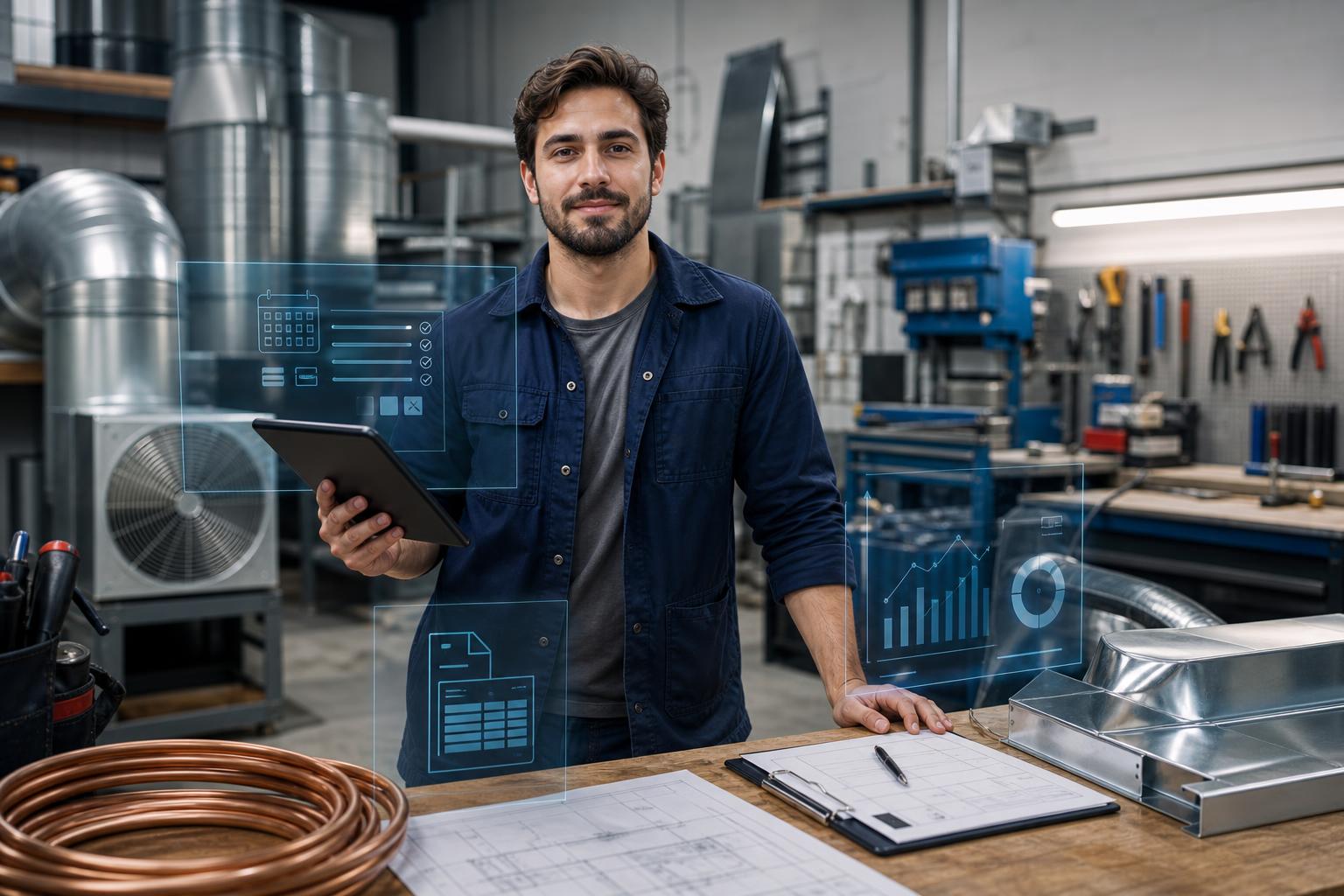
The next smart career move may not be launching an app. It may be buying the overlooked local business that keeps buildings, homes, and factories running.
The next wave of entrepreneurship may not look like a venture-backed software startup.
It may look like a 45-year-old sheet metal company in Maryland.
Forbes recently profiled Andrew Kurzrok, a former Amphenol Sensors executive who spent more than 200 days a year on the road before deciding he wanted a different kind of life. When his wife became pregnant with their first child, he began looking for a business he could buy instead of another corporate role that kept him away from home.
After reviewing hundreds of companies, Kurzrok bought Hopewell Sheet Metal Manufacturing, a family-owned business operating out of a 30,000-square-foot facility in Hagerstown, Maryland.
That purchase says a lot about where entrepreneurship is heading.
The prestige path is changing
For years, the prestige path was obvious: get the degree, climb the corporate ladder, join a tech company, or start a software business. The trades were treated as less glamorous. Local manufacturing was seen as old economy. HVAC, plumbing, pest control, electrical work, and fabrication were steady but not exciting.
Now the math looks different.
AI is putting pressure on white-collar work. It can summarize meetings, write emails, generate reports, answer customer questions, produce code, analyze documents, and automate pieces of management, marketing, finance, and operations.
But AI cannot repair ductwork. It cannot crawl into an attic. It cannot install an HVAC system. It cannot show up at a job site, manage a crew, build a customer relationship, or fabricate the physical parts that make buildings function.
That is why blue-collar businesses are suddenly more attractive to younger buyers. They are not sexy. They are durable.
The silver tsunami is not automatic
Kurzrok’s purchase fits into a larger trend that business experts have called the silver tsunami: retiring baby boomer owners looking to exit and younger entrepreneurs looking to buy. But the reality is more complicated than the slogan.
A lot of boomer-owned businesses are not actually sellable.
They may have customers, revenue, and years of history, but if everything depends on the founder, there may not be much transferable value. A business built around one person’s relationships, memory, daily labor, and personal reputation is difficult for a buyer to step into.
That is the difference between buying a business and buying a job.
The companies young buyers want have recurring revenue, clean books, a solid customer base, niche expertise, trained employees, and demand that will survive the ownership transition. Hopewell had those ingredients. It served a real industrial need. It had equipment. It had history. It had customers. It gave Kurzrok a way to use his manufacturing and M&A background without staying trapped in constant corporate travel.
The upside is modernization
This is where the opportunity is.
There are thousands of small businesses across the country that are operationally solid but under-modernized. They may not have great websites. They may not have strong local SEO. Their CRM may be weak or nonexistent. Their reviews may be underdeveloped. Their follow-up process may be manual. Their quoting and scheduling may still rely too heavily on memory, paper, or one long-time employee.
That is not a weakness for the right buyer.
It is the upside.
A younger operator can bring better systems to a business that already has demand. Better search visibility. Better review generation. Better booking. Better routing. Better financial controls. Better recruiting. Better customer communication. Better use of AI in the back office.
The key is that technology becomes leverage, not the product itself.
In a software startup, the product can be copied, displaced, or automated quickly. In a blue-collar business, the product is service delivery in the real world. The moat is not just information. It is trucks, tools, trained people, licenses, local reputation, response time, and trust.
AI can help the business run better. It cannot replace the work.
What buyers and sellers should learn
For buyers, the lesson is to be selective. A boring business can be a great investment, but only if the fundamentals are strong. Look for predictable revenue, diversified customers, clean financials, documented processes, and a team that can operate without the seller holding everything together.
For sellers, the lesson is to prepare early. If you want your business to be worth something after you leave, it has to be less dependent on you. Clean up the books. Train a successor. Document how work gets done. Reduce customer concentration. Build recurring revenue. Make the company understandable to a buyer and financeable by a lender.
For local markets, the lesson is bigger: the next generation of entrepreneurs may preserve businesses that otherwise disappear.
That matters because these companies are not abstract assets. They are employers. They serve homes, factories, restaurants, warehouses, schools, and commercial buildings. When they vanish, local capacity disappears with them.
The best version of this trend is not financial engineering. It is succession.
A retiring owner gets an exit. A younger buyer gets a real operating business. Employees keep their jobs. Customers keep their service. The company gets modernized instead of shut down.
Durable economy beats hype
The AI era may make physical-world businesses more valuable, not less. The more software automates knowledge work, the more durable essential services begin to look. HVAC, plumbing, construction, pest control, fabrication, logistics, repair, and maintenance are not glamorous categories, but they are hard to replace because they touch the real world.
That is the real takeaway from the Forbes piece.
Millennials are not just buying blue-collar businesses because they want to escape corporate life. They are buying them because the old definition of career safety is breaking down.
The future may belong to people who can combine old-economy demand with new-economy systems.
Not AI versus blue collar.
AI plus blue collar.
That is where the opportunity is.