
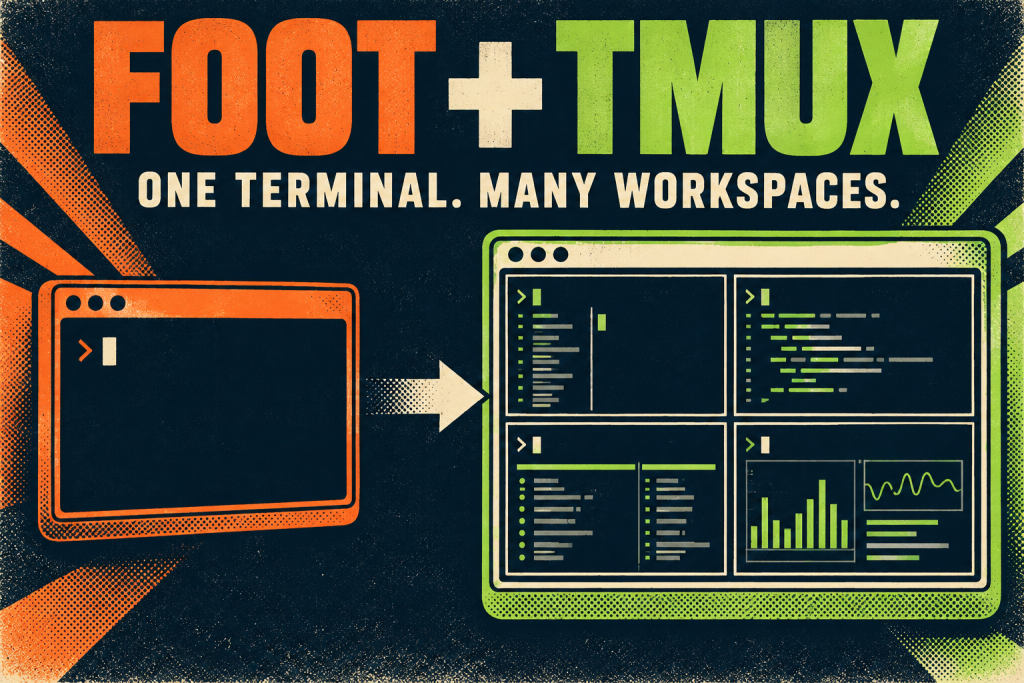
Foot vs. Tmux in Omarchy: The Terminal Window and the Workspace Inside It
New to Omarchy? Learn how Foot and tmux work together, the shortcuts to start with, and what actually survives when you close a terminal or reboot.
New to Omarchy? Learn how Foot and tmux work together, the shortcuts to start with, and what actually survives when you close a terminal or reboot.
HyperFrames turns HTML-based compositions into video. Here is where its agent-friendly workflow could help marketers—and what to test before relying on it.

For years, CMS plugin ecosystems have operated on an awkward bargain: extensions make a platform more useful, but installing one

Keyboard shortcuts are supposed to save time. Yet most people learn them the least effective way possible: they see a
For teams building WordPress, Laravel, Drupal, or Node.js projects, the slowest part of development is often not writing code. It

WordPress has a habit of hiding useful tools in plain sight. Developers will build a custom REST wrapper, wire their

OpenClaw 2026.8.1, also described in the release notes as OpenClaw 2.0, is not a small point release. It is a

OpenClaw 2.0 is the kind of release that tells you more about the direction of AI software than a dozen

The new Model Context Protocol spec moves MCP toward stateless, scalable infrastructure for production AI agents.

X has open-sourced Grok Build, its AI coding agent harness and terminal interface. Here is why that matters for developers, businesses, and the future of local-first AI workflows.

Fortress is an open-source Chromium fork that moves browser stealth into the engine itself, giving scrapers and AI browser agents a cleaner way to avoid fingerprint-based blocks.

A new open-source Claude design prompt shows where AI-assisted web design is headed: systems, taste, accessibility, and quality control instead of generic AI layouts.