
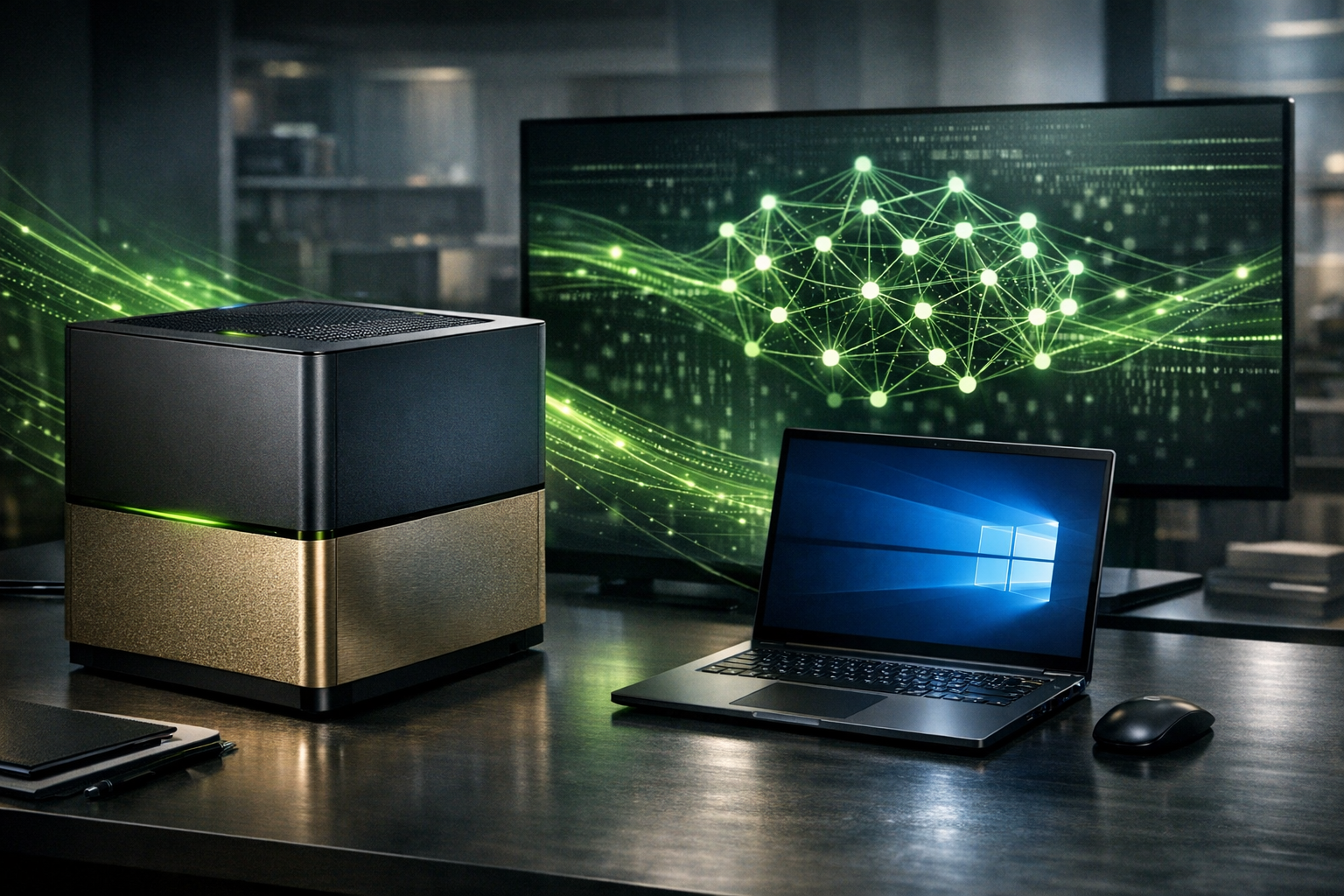
NVIDIA’s new DGX Station for Windows is a blunt statement about where AI is headed: closer to the people who actually use it. The company is packing workstation-class hardware into a Windows-native system that can run frontier models locally, instead of forcing every serious workflow through a remote data center.
The real shift is operational, not cosmetic: AI is moving from the cloud back onto the desk. For enterprise teams, that matters because the work already lives in Windows applications, design tools, engineering environments, and business systems. NVIDIA is trying to make AI feel less like a separate chatbot and more like infrastructure inside the flow of work.
What stands out in the announcement is the scale. NVIDIA says the system can support models up to 1 trillion parameters locally, with enough memory and performance to handle agentic workflows, inference, data science, and physically grounded simulation. That is not a “faster laptop” story. It is an enterprise compute strategy disguised as a workstation product.
My read: this is NVIDIA widening the moat on two fronts at once. First, it makes Windows a more credible environment for serious AI development. Second, it pushes the idea that every serious company may eventually need a local AI node, not just cloud access. If the last decade was about moving software to the cloud, the next phase may be about bringing enough of the cloud back to the desk to reduce latency, improve control, and keep sensitive work in-house.
The obvious constraint is cost. This will not be for everyone, and it does not need to be. NVIDIA is clearly aiming at high-value enterprise users who can justify premium hardware for repeated productivity gains. If it works, the payoff is simple: fewer handoffs, faster iteration, and AI that lives where the work already happens.
Source: NVIDIA newsroom press release