
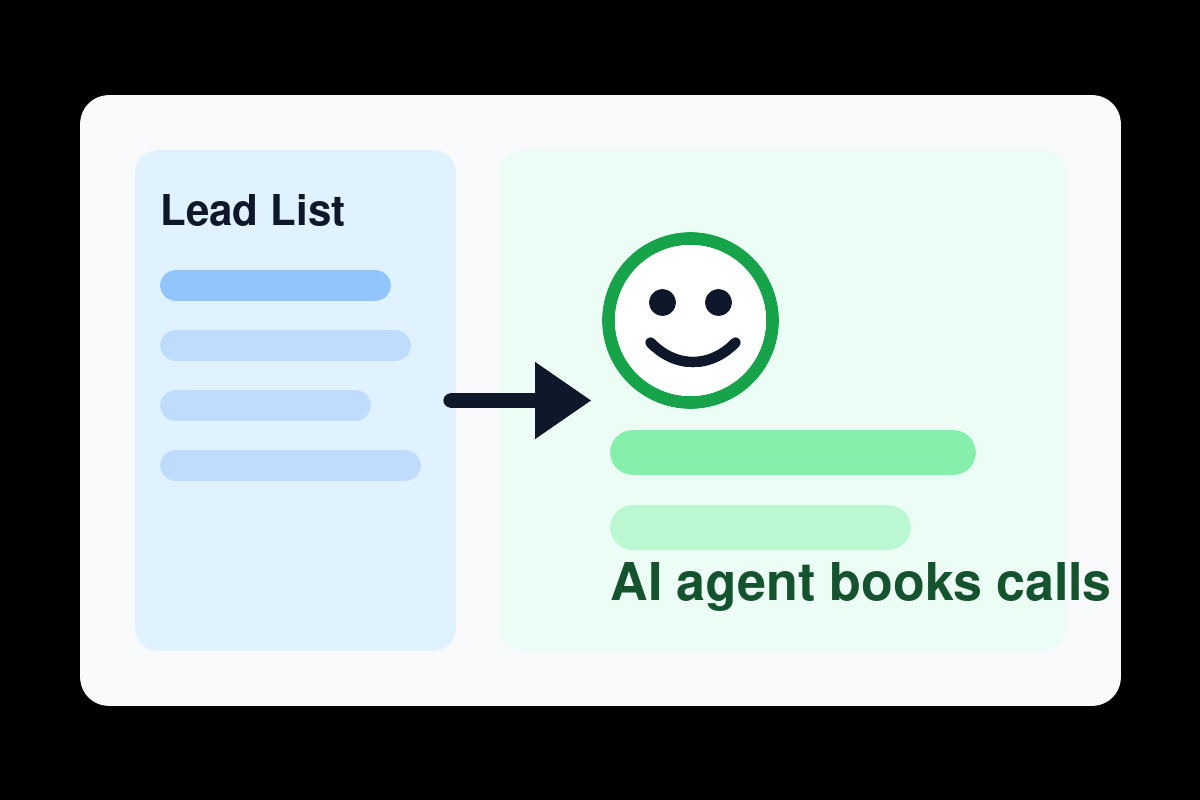
The useful local business AI agent is not a sci-fi assistant. It is a disciplined sales workflow that does the boring work every day.
Most small businesses do not need an agent that “runs the company.” They need one that finds good prospects, researches them, writes relevant outreach, follows up without forgetting, and hands warm conversations back to a human.
That is where AI agents are becoming practical: not as magic, but as tireless workflow operators for lead generation and follow-up.
The Workflow That Actually Matters
A strong local business agent starts with a list. That list might come from Google Sheets, a CRM, website forms, missed calls, Google Business Profile interactions, old estimates, or a scraped directory of nearby businesses.
From there, the agent can enrich each lead with useful context: company type, website gaps, review signals, recent news, service fit, and likely pain points. Then it can draft outreach that sounds specific because it is specific.
The workflow is simple:
- Pull or receive a lead.
- Research the business or customer.
- Score fit and urgency.
- Write a personalized first message.
- Follow up on a schedule.
- Stop when the prospect replies.
- Alert a human when the conversation is worth taking over.
Why This Beats Generic Automation
Old automation blasts the same message to everyone. That is why it performs like spam. A useful AI agent changes the economics because it can personalize at the task level while still operating at scale.
For a local service business, that might mean noticing that a restaurant’s website has no catering page, a salon has weak booking visibility, or a contractor has strong reviews but no city-specific service pages. The agent can turn that observation into a relevant message instead of another “just checking in” email.
The point is not to replace sales judgment. The point is to remove the dead time before sales judgment is needed.
Where The ROI Comes From
The ROI usually comes from three places: faster response, better follow-up, and higher-quality personalization.
- Faster response: new leads can be acknowledged in seconds instead of hours.
- Better follow-up: no lead disappears because someone forgot to send the third message.
- Better context: outreach can reference the prospect’s actual business, not a generic segment.
That matters because most local businesses do not have a traffic problem first. They have a conversion and follow-up problem. Calls get missed. Forms sit too long. Old estimates never get reactivated. Past customers do not hear from the company until the next emergency.
The Right Human Role
The human should still own the offer, the tone, the approval rules, and the actual relationship. The agent should own the repetitive motion: research, drafting, tagging, reminders, summaries, and routing.
This is where small businesses can move faster than big companies. They do not need a year-long AI transformation program. They need one narrow workflow with a clear success metric: booked calls, revived estimates, faster quote response, or more completed appointments.
What To Build First
The best first agent is usually not complicated. Start with one of these:
- Missed-call recovery agent: turns missed calls and voicemails into fast SMS/email follow-up.
- Old-lead reactivation agent: follows up with stale estimates, old inquiries, and dormant customers.
- Local prospecting agent: researches target businesses and drafts specific outreach.
- Review-to-referral agent: identifies happy customers and asks for reviews or referrals at the right time.
The winning version is narrow, measurable, and tied directly to revenue. If it cannot produce a number, it is probably just a demo.
The Bottom Line
AI agents for local businesses are becoming useful because the target is getting smaller. The goal is not “automate everything.” The goal is to make one revenue workflow happen every day without relying on memory, mood, or spare time.
For local service companies, that is enough. More follow-up. Faster response. Better personalization. More booked calls.
Loudernet takeaway: the first AI agent a small business should build is the one that turns ignored opportunities into scheduled conversations.