
Cloudflare Computer Shows Where AI Agents Are Really Going
Cloudflare’s new @cloudflare/computer preview is easy to misread as another developer package. It is more important than that. It points at a bigger shift in AI infrastructure: serious agents do not just need prompts, memory, and tool calls. They need a working environment.
The next useful agent is not just a chatbot with plugins. It is a model operating inside a computer it can inspect, change, test, and recover from.
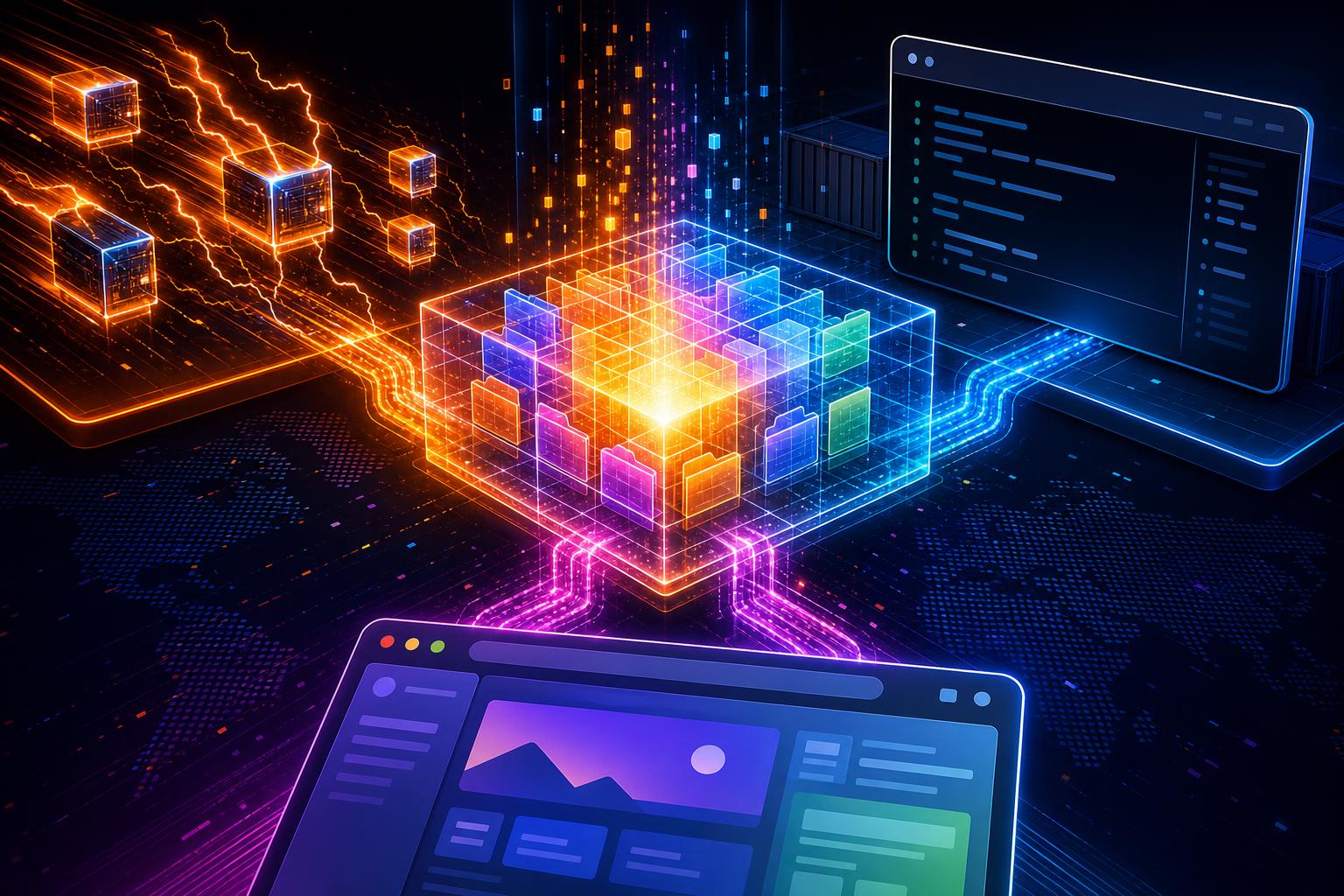
That is the core idea behind Cloudflare’s announcement. Instead of forcing developers to stitch together isolates, containers, browser sessions, storage, and filesystem state themselves, Cloudflare is experimenting with a higher-level abstraction: give the agent a “computer” and let the platform decide which execution environment should handle each job.
The abstraction matters
Most businesses still think about AI in terms of the visible interface. A chat window. A search box. A copilot sidebar. But the companies building durable AI workflows are solving a different problem underneath: how does the agent actually do work?
Cloudflare describes @cloudflare/computer as an early open-source library for agent runtimes. Each agent gets a workspace with a shared filesystem, plus access to different execution backends. Lightweight tasks can run in fast edge isolates. Heavier work can fall back to a full Linux container. Browser-based jobs can be handled through web-oriented runtimes. The developer does not have to hard-code every routing decision into the application.
That is the practical breakthrough. An agent’s environment becomes declarative. The system can prepare files, clone a repository, write a task brief, run code, modify output, and preserve the work across runtimes. The model gets a familiar surface: read files, write files, list directories, execute commands.
It sounds simple because it is the same pattern good coding agents already use. The difference is that Cloudflare is trying to make that pattern scalable, cheaper, and more portable on edge infrastructure.
Why this is bigger than containers
The title of Cloudflare’s post argues that an agent needs a computer, not just a container. That distinction is sharp.
A container is one execution primitive. It is powerful, flexible, and expensive relative to lighter runtimes. A computer is the complete working surface around the agent: files, tools, runtime choices, package access, browser-like actions, state, and recovery. For many tasks, spinning up a full container is overkill. For some tasks, it is necessary. The platform should know the difference.
If Cloudflare is right, the winning agent stack will optimize for environment orchestration, not just model selection.
That has direct implications for businesses. The companies that get leverage from AI will not be the ones that simply buy more licenses. They will be the ones that connect models to controlled operating environments where real work can happen: updating websites, generating documents, auditing code, moving data between systems, preparing reports, testing outputs, and leaving an observable trail.
The business read
For marketers, operators, and technical founders, this is another sign that the AI market is maturing from demos into infrastructure. The early era was about getting an impressive answer. The next era is about getting a reliable result.
Reliable results require context, permissions, state, tools, and repeatable execution. That is why agent infrastructure is converging around concepts that look a lot like software operations: sandboxes, filesystems, runtimes, queues, audits, deployment targets, and fallback paths.
Cloudflare’s specific approach may or may not become a standard. The direction is what matters. Agents are becoming workers. Workers need a place to work.
That should change how businesses evaluate AI vendors and internal AI projects. Do not only ask which model is being used. Ask what the agent can access, where it executes, how it stores intermediate work, how permissions are controlled, how failures are recovered, and whether the workflow can be inspected after the fact.
What to watch next
Cloudflare says its goal is to make containers necessary for less than 10% of an agent’s work, with coding tasks, audio and video manipulation, and document creation handled by lighter runtimes whenever possible. If that holds, the economics of agentic workflows improve quickly.
Lower execution cost means more background agents, more frequent checks, more automated content operations, and more AI-assisted maintenance tasks that would be too expensive or fragile if every step required a heavyweight environment.
The near-term opportunity for businesses is not to chase every new framework. It is to map the workflows where an AI agent would need a real workspace: files to read, systems to touch, outputs to test, and a clear definition of done. Once that map exists, the technology stack becomes much easier to judge.
The future of AI work is not a better prompt floating in empty space. It is an agent with a job, a workspace, and the right runtime for each step.
Source: Cloudflare Blog – Your agent needs a computer, not a container
Related: MCP’s Biggest Update Yet: Why the 2026-07-28 Spec Matters for AI Infrastructure
Pingback: Cloudflare AI Search Gives Agents a Search Engine for Company Data – Loudernet