ClawCon Chicago Showed What the Next Wave of AI Builders Looks Like
ClawCon Chicago Was More Than Another AI Meetup
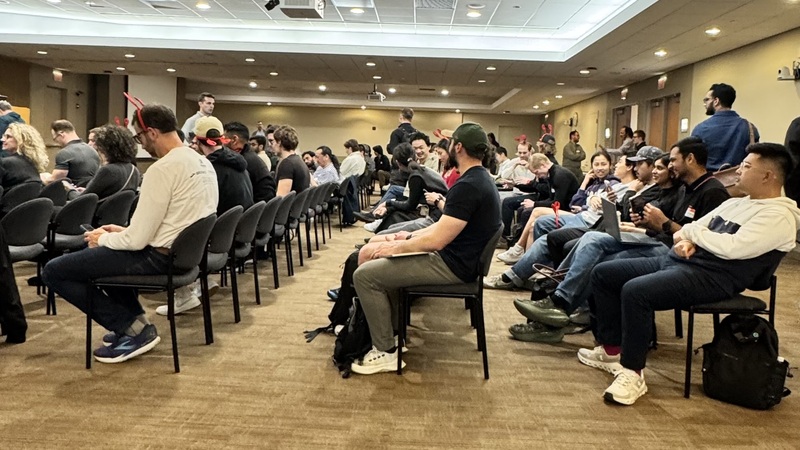
Chicago’s first ClawCon event brought together a room full of builders, founders, students, investors, and AI-curious people who are trying to figure out what this next wave of technology actually means in the real world.
The event centered around OpenClaw, agentic AI, automation, and the growing community of people building practical AI systems that can do more than answer questions. These are tools that can manage workflows, test software, support sales teams, monitor business operations, and even help take care of a shrimp tank.
That mix of serious business use cases and experimental side projects is exactly what made the event interesting.
Thank You to the People Who Made It Happen
A big thank you goes out to the organizers, hosts, sponsors, presenters, and community members who helped make ClawCon Chicago possible.
Kaya Jones of Forever 22 helped organize and host the event, bringing together the local AI community in a way that felt accessible, useful, and genuinely energetic. Salvador Dueñas, connected with Chicago:Blend, also helped host and connect the event to Chicago’s broader startup and venture community.
The Polsky Center for Entrepreneurship and Innovation provided the space, giving the event a strong University of Chicago connection. Sponsors and supporters including Vibium, Hyde Park Venture Partners, Corazon Capital, and others helped provide the food, drinks, demos, and startup energy that made the night work.
What Stood Out From the Event
One of the strongest themes of the night was that agentic AI is moving from theory into practice.
Speakers and presenters showed how OpenClaw and similar systems can be used for real business workflows, including sales research, software testing, customer relationship management, internal dashboards, executive task handling, field sales notes, and business automation.
The University of Michigan presentation was especially important because it showed how academic institutions are beginning to treat agentic engineering as a serious field of study. The discussion around the Institute for Agentic Computing and the Applied Agentic Software Engineering course pointed toward a future where students are not just learning how to code, but how to build and coordinate intelligent systems.
Chicago Has a Real AI Builder Community
What made the event feel different was that it was not only about big companies or polished tech demos. It included students, startup founders, professors, investors, sales leaders, software engineers, and independent builders.
Some presenters showed polished business tools. Others showed experimental personal projects. Both mattered.
That is usually how real technology movements grow. Not from one perfect product, but from a community of people trying things, breaking things, sharing what worked, and helping each other move faster.
The Business Side of Agentic AI Is Getting Clearer
A lot of AI conversations still feel vague. ClawCon Chicago made the business opportunity easier to understand.
Agentic AI is not just about replacing tasks. It is about connecting tools, memory, workflows, data, messaging, and decision-making into systems that can actually help people operate.
For businesses, that could mean:
- Following up with leads automatically
- Researching accounts before sales calls
- Testing websites and software faster
- Creating internal dashboards from plain-language requests
- Managing daily priorities and open tasks
- Improving CRM and sales workflows
- Helping teams turn ideas into working tools faster
The real opportunity is not just using AI to generate content. It is using AI to reduce friction inside the business.
A Few Projects and Companies Worth Watching
Several demos and companies stood out during the event. Vibium showed how browser testing and automation can be built for AI agents instead of only human testers. Listel, led by Rachel Stewart, showed how face-to-face sales conversations can become searchable, useful business intelligence. DataHub demonstrated how data context can support sales teams, account research, and AI-assisted business workflows.
Other presenters showed how AI agents can help manage internal software tasks, support marketing simulations, automate startup operations, recommend coffee shops, and monitor a shrimp tank with sensors, photos, logs, and daily updates.
The range of demos was the point. Agentic AI is not one narrow use case. It is becoming a flexible layer that can sit between people, tools, data, and daily work.
The Local Opportunity
For Chicago, events like this matter.
The city already has strong universities, startup investors, technical talent, agencies, consultants, and small businesses that need better tools. Agentic AI creates an opening for all of those groups to work together.
Small businesses need automation. Startups need faster development. Students need practical experience. Investors need to see what is being built. Technical people need real-world problems to solve.
ClawCon Chicago put all of that in the same room.
Final Thought
ClawCon Chicago was a reminder that the future of AI is not only being built in Silicon Valley. It is being built by people experimenting after work, students hacking together projects, founders trying to stay sane, sales teams looking for better context, and local communities willing to share what they are learning.
That is what made the event worth watching.
The livestream gave more people a chance to see what happened in the room, but the bigger takeaway is simple: Chicago has builders, and they are already working on what comes next.