
If you want to know how good an AI model is, the first question is surprisingly simple: good at what?
That is where Agent Arena and Scale Labs diverge. Both are trying to answer the same big question, but they approach it from different angles.
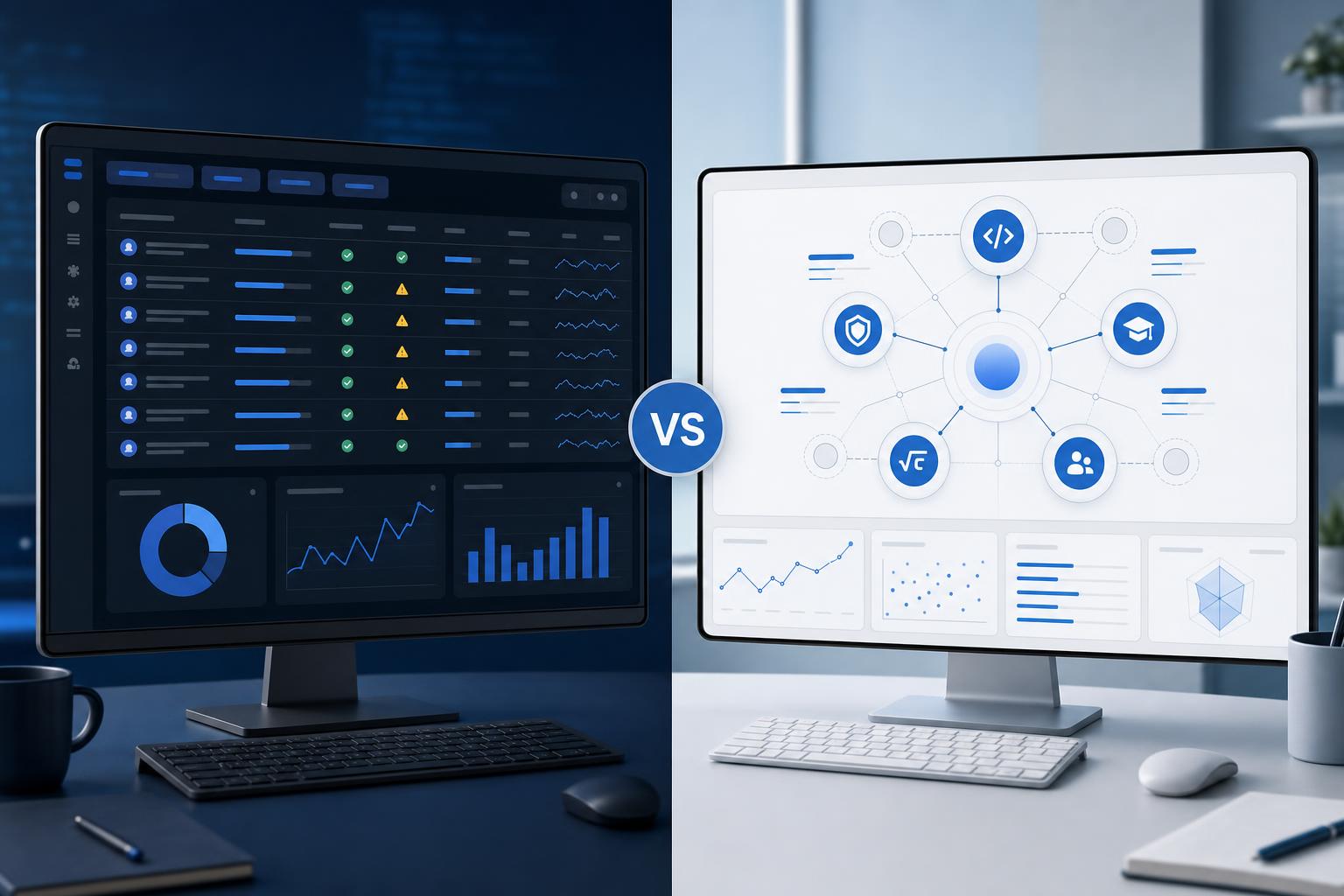
Agent Arena is built around a specific idea: how well do models behave inside real agent workflows? Its agent leaderboard is a dynamic ranking based on real usage, with signals like task completion, steerability, bash recovery, and tool hallucination. In plain English, it is measuring whether a model can actually get work done without getting lost, inventing tools, or failing to follow instructions.
Scale Labs takes a broader, research-first approach. Its work is less about one leaderboard and more about an evaluation ecosystem across agents, post-training, reasoning, safety, alignment, coding, tutoring, math, and tool use.
That difference matters.
What Agent Arena Is Best At
Agent Arena feels like a live performance dashboard. It is not just asking whether a model can answer questions. It is asking whether the model can operate in an environment where tools matter and failure is expensive.
Its agent leaderboard is built from more than 345,000 sessions across 18 models. The ranking is not just one score either. It breaks performance into multiple operational signals:
- Confirmed Success
- Praise vs. Complaint
- Steerability
- Bash Recovery
- Tool Hallucination
That makes Agent Arena especially useful if you care about practical agent behavior. If your team is building workflows where models need to navigate tasks, recover from mistakes, and follow direction reliably, this is the kind of leaderboard that feels close to reality.
What Scale Labs Is Best At
Scale Labs is broader and more research-oriented. Instead of focusing on one agentic leaderboard, it publishes a portfolio of benchmarks and papers. That gives it a wider lens on model capability.
From the public pages, Scale Labs is clearly investing in:
- coding agents
- tutoring and feedback
- math and reasoning
- human-in-the-loop evaluation
- safety and adversarial robustness
- tool-use and agent reliability
That makes Scale Labs valuable when you want to understand not just how a model performs, but why it performs that way. It is a stronger fit for people who want benchmark diversity, research depth, and domain-specific evaluation.
The Real Difference
If you strip it down, the difference looks like this:
- Agent Arena is narrower, more operational, and focused on real-world agent behavior.
- Scale Labs is broader, more research-heavy, and built around a larger benchmark ecosystem.
Or put another way: use Agent Arena when you want to know how models behave in actual agent tasks. Use Scale Labs when you want to understand model quality across multiple specialized domains.
Which One Is More Useful?
That depends on your goal.
If you are a product team shipping an AI agent, Agent Arena may be the more practical signal. It is closer to what users actually experience when models must take actions, recover from mistakes, and complete tasks end to end.
If you are a researcher, evaluator, or builder who wants a wider view across coding, tutoring, math, safety, and alignment, Scale Labs gives you more surface area and more context.
The smartest takeaway is not to pick one and ignore the other. They are complementary.
Agent Arena shows you how models behave when the rubber meets the road. Scale Labs shows you how models perform across the broader research landscape.
Sources: Agent Arena agent leaderboard, Agent Arena methodology, Scale Labs SWE Atlas, Scale Labs MCP Atlas.