
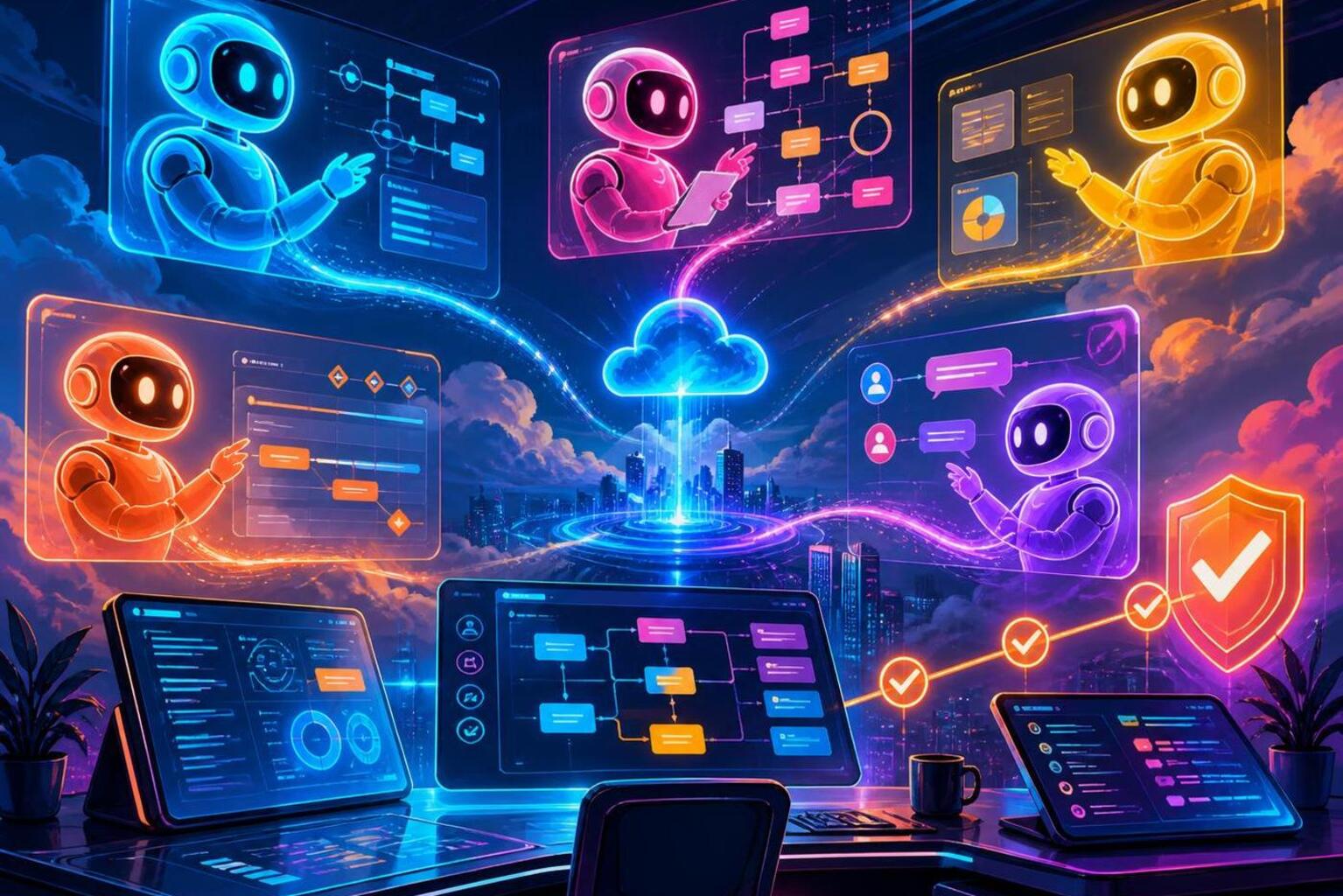
SpaceXAI is pushing Grok into a new category: not just a chatbot that answers questions, but a cloud-based AI worker that can be assigned tasks, sign into tools, coordinate with other bots, and come back when work is finished.
That sounds like a product update. It is really a signal. The AI race is moving from conversation to delegation.
From Assistant to Assigned Worker
According to The Verge, Grok Bot is launching in beta as an always-on AI agent service. The idea is simple: give the bot a job from desktop or iOS, let it operate inside a remote computer environment, and have it use the apps, websites, and accounts needed to complete multi-step work.
The important detail is not that Grok can chat. Everyone can chat now. The bigger shift is that these agents are being packaged as teammates that can run in parallel, message each other, divide ownership, and hand back work only when they hit a checkpoint or need approval.
For businesses, that changes the mental model. Instead of asking, “What prompt should I write?” the question becomes, “What recurring work can I safely delegate?”
The Trust Problem Is the Product
There is an obvious tradeoff here. If an AI agent can complete real work, it needs real access. That means logins, documents, inboxes, calendars, CRM tools, project systems, and internal context.
That is powerful. It is also where the risk lives.
The winner in AI agents will not simply be the model that sounds smartest; it will be the system that manages permission, memory, audit trails, and approvals best. Companies will want speed, but they will also need clear boundaries: what the agent can do, what it can see, what it can change, and when a human must step in.
Grok Bot is arriving alongside a wider wave of workplace agent products from major AI companies. That competition matters because the category is still being defined in public. Some products will feel like better automation. Others will feel like junior operators. The difference will come down to reliability, workflow fit, and how much cleanup they create after the fact.
Why This Matters for Small Teams
For small companies, the promise is obvious. A good AI teammate could help with sales follow-up, research, marketing drafts, bug triage, reports, scheduling, and operations work that currently gets delayed because nobody has time to own it.
But small teams should be careful about the first use cases. The best early deployments will be bounded and reviewable: drafting outreach, summarizing leads, preparing task lists, researching competitors, checking broken links, or assembling reports. Work that touches money, legal commitments, customer data, or public publishing should keep tighter human approval.
The right test is not whether the bot can do something once. The right test is whether it can do the same task repeatedly without creating hidden risk.
The Real Takeaway
Grok Bot points toward a near future where AI tools are judged less by their answers and more by their follow-through. Can they complete the work? Can they coordinate? Can they remember preferences without becoming a liability? Can they ask for approval at the right moment?
That is the next battleground. Not chat windows. Work ownership.
If AI agents become normal workplace infrastructure, the companies that benefit most will be the ones that document their workflows now. Clear processes, clean permissions, structured data, and measurable outcomes will matter more than clever prompts.
Sources: The Verge. Related Loudernet coverage: Grok Build Goes Open Source and Grok Imagine Image 2.0.
Pingback: xAI Introduces Grok Bot as Always-On AI Teammates – Loudernet