
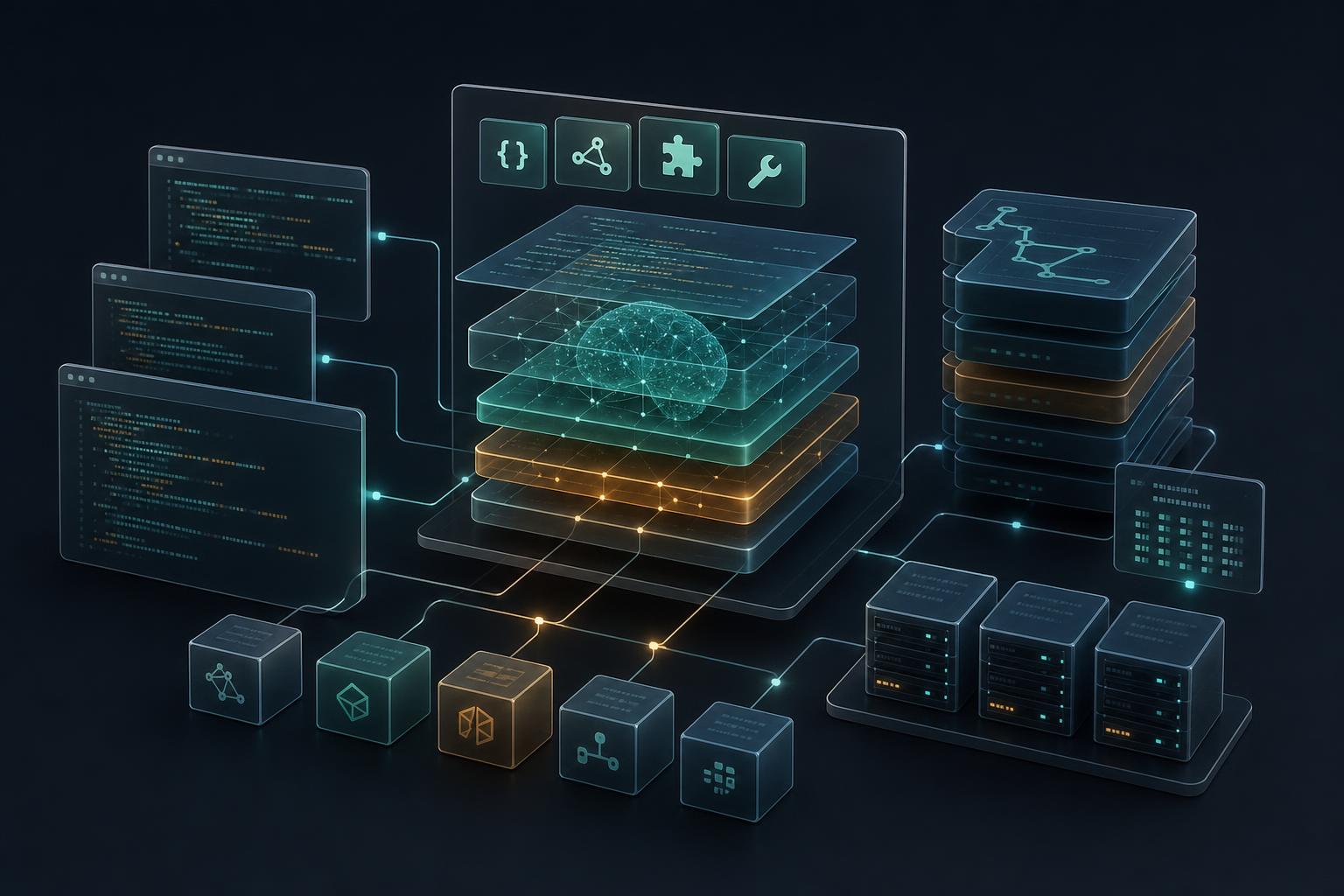
X has open-sourced Grok Build, its coding agent harness and terminal interface, and the move is bigger than another repository going public.
For businesses trying to understand where AI software development is heading, this is a useful signal. The competitive edge is shifting from access to a model toward the quality of the harness around that model. That harness decides how context is assembled, how tools are called, how code edits are reviewed, and how safely an agent can operate inside a real engineering workflow.
What X actually released
According to X, Grok Build includes the pieces behind its coding agent and TUI: the agent loop, model response parsing, command execution, code search and edit tooling, terminal rendering, inline diff review, and the extension system for skills, plugins, hooks, MCP servers, and subagents.
That matters because agent performance is not only about the model answering a prompt. In practical software work, the surrounding system has to manage files, maintain context, call tools in the right order, handle failures, and keep the developer in control. Open-sourcing those mechanics gives builders a reference point they can inspect instead of treating the agent as a sealed black box.
The local-first angle is the real business story
X also says Grok Build can run local-first: developers can compile it themselves, point it at local inference, and configure behavior through config.toml.
That is important for technical teams with privacy, compliance, or cost constraints. A local-first agent architecture can reduce dependency on one hosted workflow, make experimentation cheaper, and give companies more control over what code and context leave their environment. For serious teams, inspectability and deployment control are not nice-to-have features. They are adoption blockers.
Why open source changes the AI agent market
AI coding tools are moving fast, but many of them still ask companies to trust the vendor’s invisible decisions. What files get included? How are commands gated? How are plugins loaded? What happens when the model returns malformed instructions? How does the interface make dangerous changes visible before they land?
Publishing the harness makes those questions easier to answer. It gives developers a way to study the architecture, extend the workflow, compare implementation choices, and pressure the rest of the market toward more transparency.
It also creates a new kind of competitive pressure. If the agent layer becomes open, vendors will have to compete on execution quality: better model routing, better context discipline, better UI, better safety controls, better enterprise integration, and better outcomes in real repositories.
What businesses should watch next
This is not just developer news. It is a preview of how AI operations may evolve inside companies.
Marketing teams, agencies, and software businesses should watch for three things: whether open-source agent harnesses become the default for internal automation, whether local inference becomes practical enough for sensitive workflows, and whether extension systems like skills and MCP servers become the connective tissue between AI tools and business software.
The future AI stack may look less like one chatbot and more like an operating layer: model, tools, memory, permissions, workflow, and interface working together. Grok Build going open source pushes that direction into the open.
For companies evaluating AI development tools, the takeaway is simple: do not judge the product only by the demo. Look at the harness. Look at the control surface. Look at how the system behaves when it touches real work.