
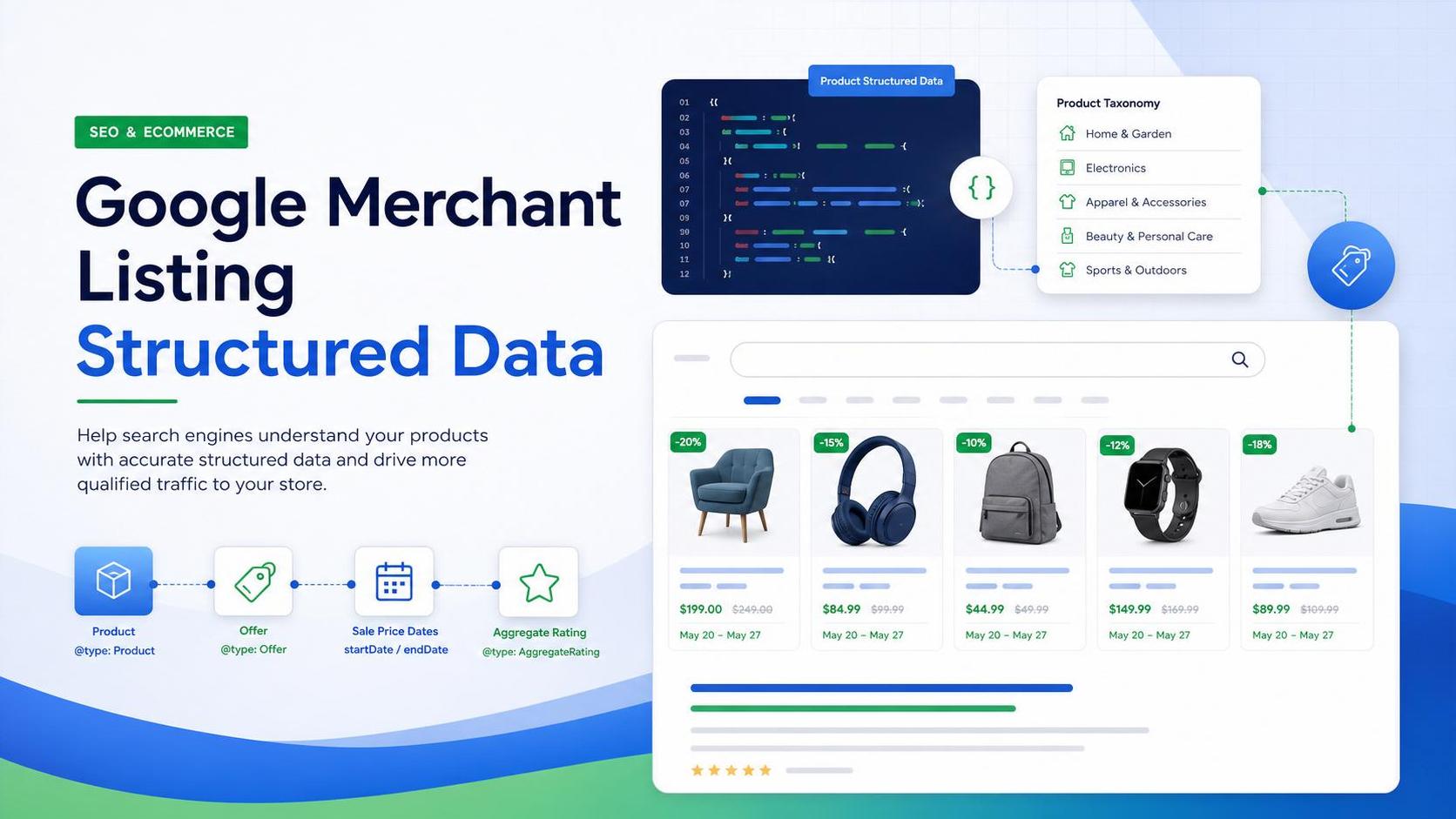
Google has expanded its Merchant Listing structured data guidance in a way ecommerce sites should take seriously. The headline change is support for a new category property on Product markup, giving merchants a cleaner way to connect page-level structured data with the category logic already used in product feeds.
For retailers, this is less about chasing a new SEO trick and more about reducing ambiguity in how Google understands products. If a product page, Merchant Center feed, and Google Product Category all tell the same story, Google has fewer gaps to reconcile before showing rich product information in search.
The Practical Change
The new category property can be expressed as plain text, similar to a custom product type, or as a CategoryCode object tied to Google’s product taxonomy. That means a product page can now carry category signals such as a Google Product Category ID, a full taxonomy path, or custom merchant-defined category labels.
For stores with large catalogs, that matters. Feed data has traditionally carried much of this classification work, while the page markup handled the product basics: name, image, price, availability, reviews, shipping, and returns. Bringing category data into on-page structured data makes the page itself more complete.
Sale Pricing Gets Cleaner Too
Google also clarified how merchants should mark up sale duration. The important fields are validFrom, validThrough, and priceValidUntil, depending on where the sale price is defined in the markup.
The goal is straightforward: Google should know exactly when a sale starts and when it ends. That helps avoid expired discounts lingering in search results, which can create a bad user experience and a trust problem for the retailer.
What Ecommerce Sites Should Do Now
Merchants do not need to panic. The new category property is recommended, not required. But stores that rely on organic search, Google Images, product snippets, or shopping-style visibility should treat this as a useful cleanup opportunity.
A smart next step is to audit a representative set of product pages and compare three things: the product page schema, the Merchant Center feed, and the Google Product Category assignment. If those disagree, the site is sending mixed signals.
For sale pricing, the review should be even more concrete. Any product using temporary discounts should include accurate start and end timing in ISO 8601 format, preferably with timezone data. That is especially important for flash sales, seasonal campaigns, clearance events, and promotional landing pages.
The SEO Takeaway
This update reinforces a broader direction in ecommerce SEO: structured data is becoming more operational, not just decorative. It is not enough to add basic schema once and forget it. Product markup should reflect the real catalog, the real offer, and the real promotional window.
The best implementations will make the product page, product feed, and checkout reality match as closely as possible. That is where structured data becomes useful: not as markup for its own sake, but as a reliable translation layer between the store and search engines.
For businesses selling products online, this is a good moment to tighten category mapping, clean up sale date logic, and validate product pages in Google’s Rich Results Test before the next promotion goes live.
Sources: Search Engine Journal; Google Search Central Merchant Listing structured data documentation.