
This article was originally published on Psychology Today – The Minute Therapist by Jeffrey S. Nevid. Republished here with permission for educational purposes.
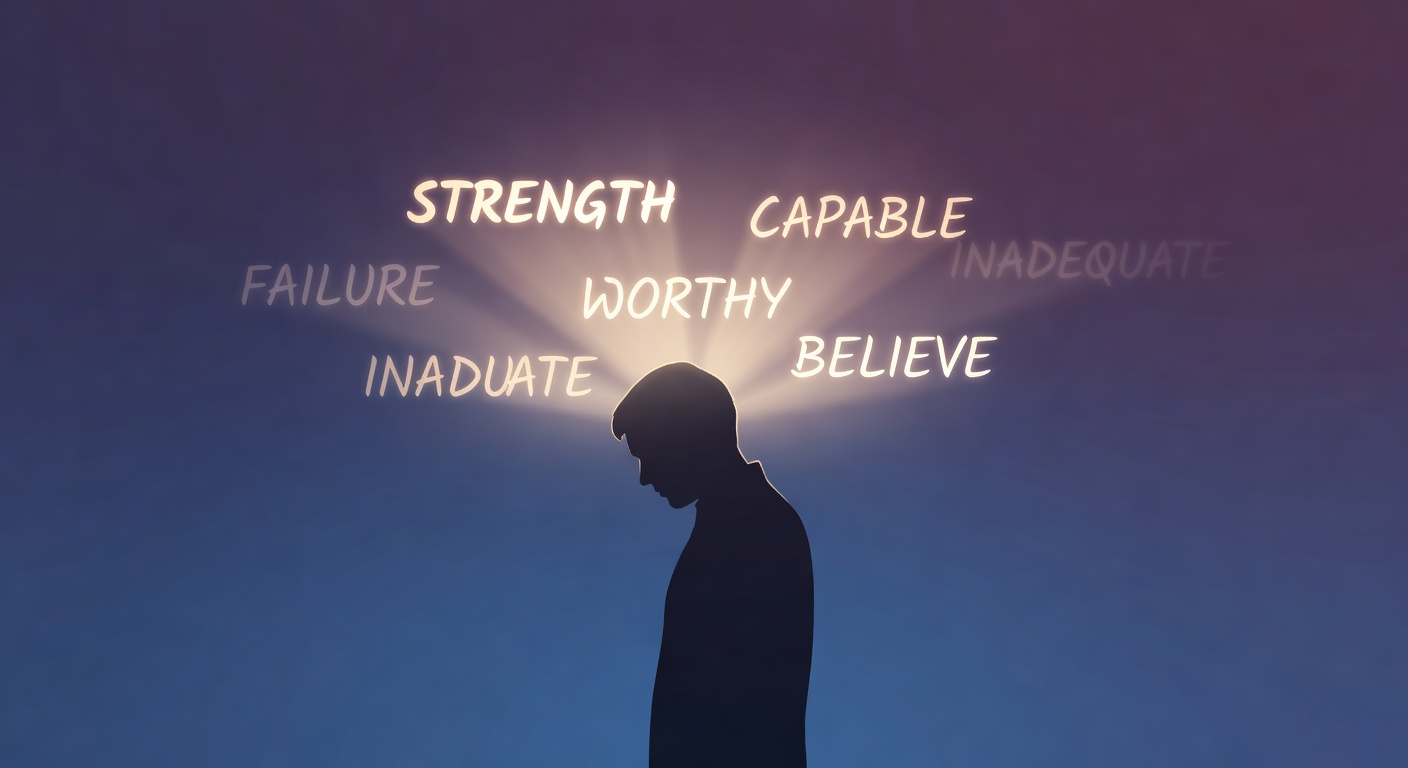
What you say to yourself matters. More than you probably realize.
When you catch yourself thinking “I’m such a screw-up” or “I’ll never be good enough,” your mind doesn’t stop to evaluate whether that’s actually true. It doesn’t pull out a fact-checker. It just… believes you. And that belief becomes the foundation for how you feel about yourself, what you attempt, and who you become.
The silent conversation you have with yourself all day long—what psychologists call self-talk—is one of the most underestimated forces shaping your life. Most people would never let a critical friend talk to them the way they talk to themselves. Yet we tolerate a relentless inner critic that undermines our confidence, drains our motivation, and keeps us stuck.
The good news? You can change this. But it starts with understanding what’s actually happening.
Your Mind Believes What You Tell It
Here’s the harsh truth: Your mind doesn’t fact-check you.
When you put yourself down, your mind absorbs it as truth. You say “I’m incompetent,” and your brain treats it as a statement of fact. You say “I’m destined to fail,” and your mind aligns with that prediction. This isn’t because you’re weak or broken—it’s because your mind is designed to trust what it hears, especially when it comes from you.
This self-directed negativity has sticking power. It doesn’t just pass through. It affects:
- Your deepest feelings about yourself – Building layers of self-doubt
- Your motivation – Draining the energy to pursue what you want
- Your behavior – Leading you to avoid challenges or give up too easily
- Your reality – Shaping the life you actually live
Negative self-talk is like a background hum of negativity you’ve learned to tune out—but that doesn’t mean it’s not working on you. It’s always there, always influencing.
The Insight Fallacy: Waiting for Permission That Never Comes
Many people wait for the perfect moment to change. They wait for “deep insight” into why they think negatively. They believe they need to excavate their psyche, understand their childhood wounds, or achieve some mystical moment of clarity before they can actually change.
So they wait. Months pass. Years pass. Waiting for that magical insight that will suddenly make everything click.
Here’s what research shows: That’s backwards.
Change doesn’t come from deep introspection. It comes from action in the here and now. You don’t need to understand every reason you think negatively to start thinking differently. You need to make the change first, and the understanding often follows.
The status quo feels safer—even when it’s making you miserable. But what if you could change your inner dialogue starting today? Not someday. Today.
Thoughts Are Not Facts—They’re Just Stories
This is the mind-shift that changes everything:
A thought is just a fleeting mental experience. It’s not a statement of truth. It’s an interpretation. A story your mind tells to make sense of things.
But here’s what happens: We treat our thoughts like facts. We believe them without questioning, even though we know our own perceptions can deceive us. We’d never accept claims from others without evidence, but we accept claims from ourselves without hesitation.
- Your friend doesn’t text back immediately → You think she’s angry with you (story)
- You make a mistake → You think you’re a screw-up (story)
- Something doesn’t go as planned → You think you’re not capable (story)
These stories feel real when you think them. But they’re mental traps—habit patterns where you get caught in a narrative of your own making. They lead to negative emotions (anxiety, guilt, anger, depression) that feel like they’re coming from reality, when really they’re coming from a false narrative you’re running in your head.
Know the Thought, Know the Emotion
Want to control anxiety, anger, guilt, or depression? Start here:
Identify the thought driving it.
What story is your mind telling you? What assumption are you making? Once you see the thought clearly—separate from the emotion it creates—you can examine it:
- Is this actually true?
- What evidence do I have?
- What else could be true?
- What would I tell a friend in this situation?
The moment you recognize that a thought is an interpretation (not a fact), it loses power. You’re no longer trapped inside the story. You’re observing it from outside.
Changing Your Mind Is Hard (But Absolutely Worth It)
Economist John Kenneth Galbraith said it perfectly: “Faced with the choice between changing one’s mind and proving that there is no need to do so, almost everyone gets busy on the proof.”
We’d rather defend our negative beliefs than change them. It’s easier. It feels safer.
But here’s what’s possible: Your thinking is malleable. Like clay, it can be shaped. You can question your stories. You can replace them. You can literally rewire how your mind works by changing what you tell it.
The most difficult thing? Actually questioning your own thinking. Most people never do it. They let their thoughts run on autopilot, unexamined and unchallenged, for decades.
That doesn’t have to be you.
The One-Minute Shift
Here’s what’s beautiful: It takes just a minute—sometimes less—to change a thought.
Instead of drowning in the story, you can pause and ask: “OK, what can I do right now?”
One thought can change a feeling. One feeling can change an action. One action can change the direction of your day, your week, your life.
You are not your thoughts. You are not bound by the stories you tell yourself. Your mind is listening—so what are you going to tell it?
The Bottom Line
Words have power. Your own words have the most power of all, because you believe them.
Stop waiting for perfect conditions or deep insight. Start now. Today. This minute.
Listen to what you’re saying to yourself. Question it. Replace it. Change your mind, and you change your life.
What will you tell yourself differently today?
For more on mental health and self-talk, consult a licensed mental health professional in your area if you’re experiencing significant emotional or mental health concerns.